



We’re still building brands in a marketing silo.
Customers experience the entire business.
I think we need to stop talking about brand building as if it’s primarily a Marketing exercise.
Traditional brand building has largely focused on positioning, identity, communications and consistency. All of that still matters, but it represents a fraction of how customers experience a modern business.
Today, your brand is shaped by your product, service, employees, digital experience, operating processes and increasingly AI. Marketing can influence these things, but it doesn’t own most of them.
Modern brand building has become an ecosystem design problem.
I’ve always thought of brand as your business, as seen through the eyes of your customers. You can project who you want to be, but ultimately customers decide whether the experience supports the claim.
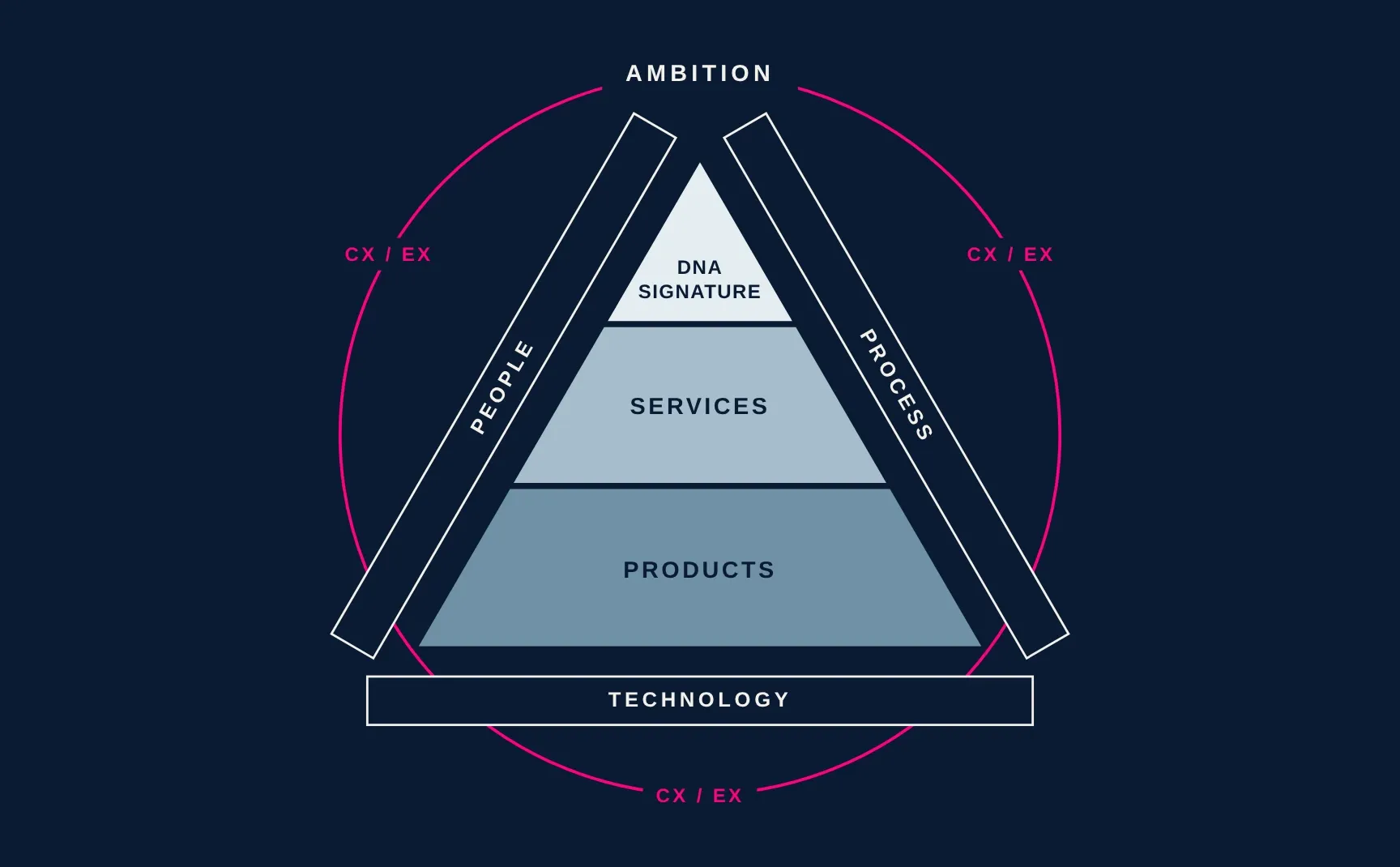
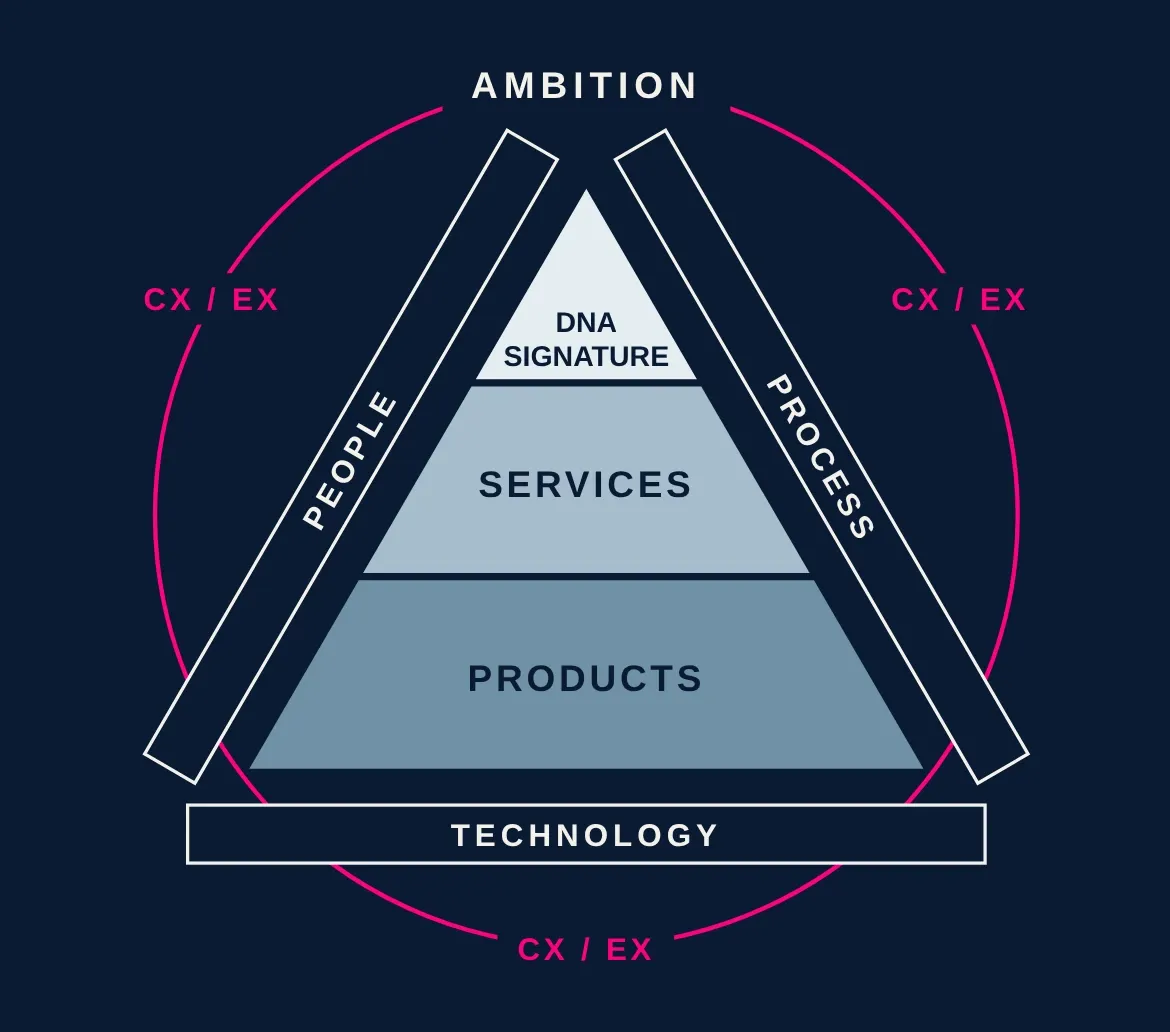
That’s the thinking behind what we call Brand Ecosystem Design at Dialed.
Start with what the customer actually experiences
At the centre of the model are three layers: Product, Service and Signature.
Product is the brass tacks of what you’re selling. Does it work, solve a meaningful need and deliver value? Product differentiation still matters, but it’s increasingly difficult to sustain as capabilities spread and competitors catch up.
Service is everything wrapped around the product and what it’s actually like to do business with you. Is buying easy? Can you resolve problems efficiently? Is support helpful? Are you making the customer’s life easier or more complicated?
Signature is what makes the experience distinctly yours. It’s the behaviours, details and experiences that express your brand’s DNA and create something customers value that they can’t get quite the same way elsewhere.
These three layers shape what customers experience. But delivering them consistently requires something much bigger than Marketing.
The brand is only as good as the system behind it
Behind Product, Service and Signature sit three critical enablers: People, Process and Technology.
People are where brand and culture intersect. I’ve always loved the quote, “Brand and culture are two sides of the same coin.” Employees need to understand the promise, believe in it and be empowered to deliver it. If you promise simplicity while employees need seven approvals to solve a basic customer problem, that disconnect will eventually become the customer’s experience.
Process is one of the most overlooked parts of brand building. My favourite question is pretty simple: How does shit actually get done in your organization?
Not what the documented process says, but where decisions really happen, where work gets stuck and which workarounds have quietly become standard practice. Systematization is one of the greatest pathways to scale, yet many organizations haven’t properly mapped the workflows that run their business.
That’s becoming especially important with AI.
Before automating work, you need to understand whether the process makes sense in the first place. Otherwise, you’re simply scaling dysfunction.
Technology enables the organization to deliver, personalize and scale the experience. AI, automation and data platforms create extraordinary opportunities, but technology still isn’t a strategy.
Too often, organizations start with a tool and work backwards to find a business problem. The sequence should be the opposite: define the experience, understand the capabilities required to deliver it, then determine where technology can create the greatest value.
Everyone needs to know which mountain they’re climbing
Sitting above the ecosystem is Ambition, and I don’t mean the mission statement hanging on the wall.
A great boss, friend and mentor of mine always used Everest as an analogy. Everyone understands the mission is to reach the summit, but nobody leaves base camp and walks straight to the top. There are camps along the way, and reaching each one creates the conditions for reaching the next.
Businesses need the same discipline. The ambition must translate into milestones, capabilities, actions and accountabilities that people throughout the organization understand.
Too often, ambition stays within the executive ranks. It gets presented at the leadership offsite, but ask someone three levels down what it means for their priorities this year and things get fuzzy.
If people can’t explain where you’re going and their role in getting there, you don’t have an organizational ambition. You have an executive presentation.
The ecosystem needs feedback loops
The final component surrounds everything else: Customer Experience and Employee Experience. Together, they tell us whether the ecosystem is delivering what we intended and where it needs to improve.
Measurement is essential, but more dashboards aren’t necessarily the answer. Not all KPIs serve the same purpose. Some help teams optimize performance, others diagnose problems, and others evaluate whether the broader strategy is working.
The important part is connecting the right measures to the right decisions, owners and operating rhythms. A measure only creates value when someone uses it to make a decision or take action.
That’s how measurement becomes a feedback loop for continuous improvement rather than another reporting exercise.
This is why we call it Brand Ecosystem Design
When you put it together, the model is relatively simple:
Ambition provides direction. Product, Service and Signature define what customers experience. People, Process and Technology enable the organization to deliver it. And Customer and Employee Experience, supported by measurement, tell us whether it’s working.
The value comes from understanding how these pieces connect. A service issue may actually be a broken process, while a poor customer experience may stem from employees who aren’t empowered to make decisions. What looks like a communications problem may have very little to do with communications.
That’s why we use Brand Ecosystem Design at Dialed as a diagnostic tool. Rather than assuming a client needs a new brand strategy, customer journey, operating model or technology platform, we look across the ecosystem to understand where the experience is breaking and identify the root cause.
Sometimes the answer sits within Marketing. Often it doesn’t. We don’t need our fingerprints on everything; we want to find the things preventing the system from working and help fix them.
For too long, we’ve treated brand building as something Marketing leads and the rest of the organization supports. I think we need to invert that thinking.
Marketing may help define the brand, but the entire business delivers it. We need to start designing the ecosystem behind it.